TEi Composites邁向五十週年TOWARD FIFTYTo our 50th—days00:00:00

Materials

Carbon Fiber Fabric

Plain, twill, satin and multiaxial carbon fabrics.

What is carbon fiber fabric?

A reinforcement fabric woven from continuous carbon tows. Light and stiff, with load directions set by the weave.

Weave styles
Plain · Twill · Satin · Multiaxial
Tow size
3K – 24K
Fiber grades
Standard modulus and up
Width
1020 mm, 1270 mm, 1560 mm
Origin & traceability
Made in Taiwan · Batch traceable
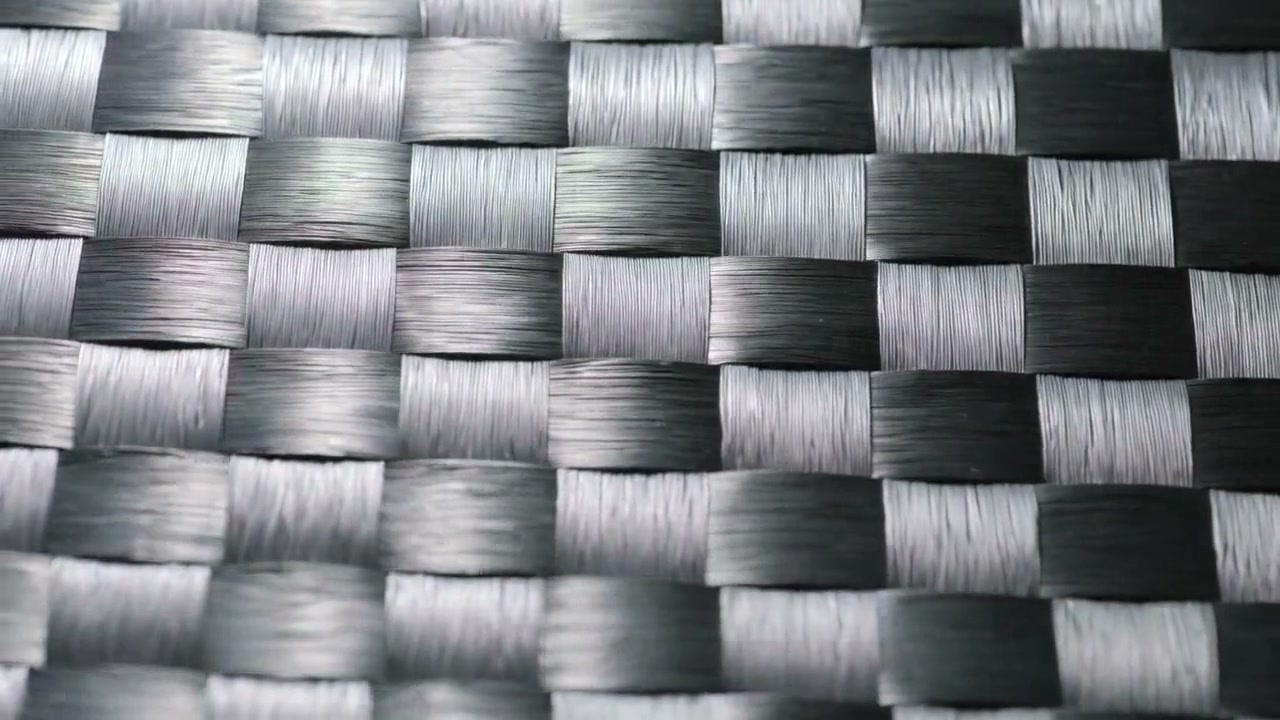
Carbon fiber plain weave fabric (actual photo)

Four weaves

Plain

Drape Surface Stability

Most crossover points, most stable construction; highest crimp, so mechanical translation is the most conservative. In return: the best resistance to yarn slippage and fraying after cutting, high handling tolerance, common in light areal weights. Typical uses: flat and gently curved parts, cosmetic surface plies, tooling and templates.

Twill

Drape Surface Stability

Fewer crossovers and lower crimp than plain weave — mechanics and drape both improve, conforming to moderate curvature without wrinkling; also the classic visible-carbon texture. Typical uses: automotive and motorcycle trim and aero parts, consumer electronics and luxury housings, sporting goods.

Satin

Drape Surface Stability

Fewest crossovers, lowest crimp — the best mechanical translation and drape of any woven, conforming to deep-curvature mold surfaces. Trade-offs: looser construction, easy distortion in cutting and layup, asymmetric face/back — manage ply orientation pairing and stacking symmetry to prevent warpage. Typical uses: aerospace secondary structures and fairings, deep-curvature shells, complex geometry.

Multiaxial

Drape Surface Stability

NCF stitches straight 0°/±45°/90° fiber layers into one sheet; UD concentrates fibers in a single direction. Zero crimp and the highest mechanical translation — one ply completes multiple orientations. Drape is limited by the stitching, favoring large, gently curved parts and automated layup. Typical uses: large structural panels, beam reinforcement, marine and energy structures, production layup.

How to choose

Not sure? Send TEi your drawings and load case — we'll match the fabric.

Ask TEi
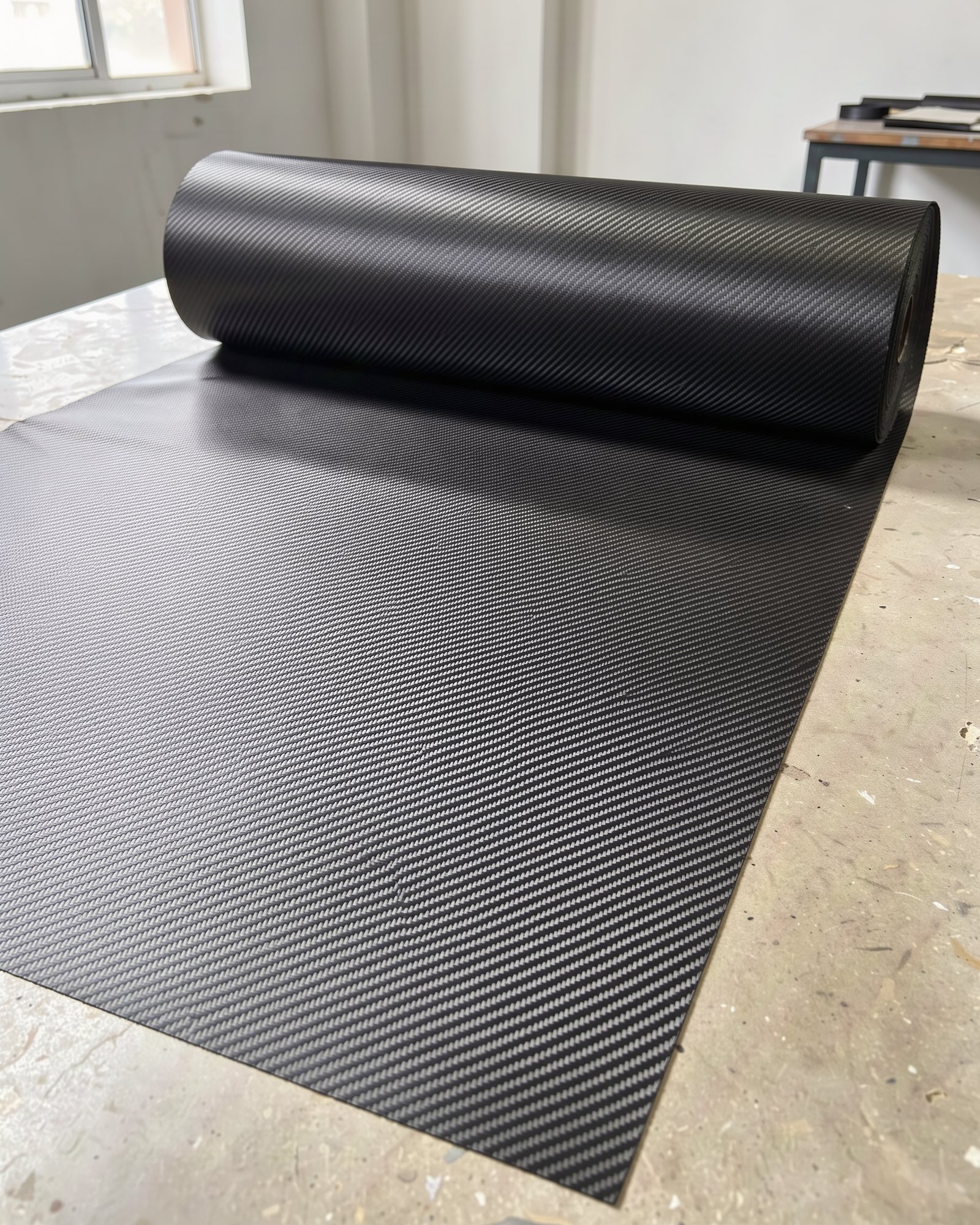
Full roll of carbon fiber twill fabric unrolled (actual photo)

Which K-number?

Cosmetic parts, thin walls, fine texture3K fine tow
Structural build-up, cost & labor efficiency12K / 24K heavy tow

For the same laminate thickness, the heavy-tow route usually costs less in both material and labor.

Which areal weight?

High orientation freedom, finer surfacesLight weight · more plies
Fast stacking, fewer layup hoursHeavy weight · fewer plies

Start from your target thickness and ply-by-ply orientation plan, then work backward to areal weight — never pick the weight first. Actual ply thickness also depends on resin content and molding process — verify by measurement.

Which weave?

Flat and gently curved surfacesPlain
General curvature, visible-carbon partsTwill
Deep curvature, complex geometrySatin
Known load direction, maximum efficiency or large-area productionMultiaxial / UD

For cosmetic parts, define weave-alignment requirements up front — misaligned texture is the single most common complaint on visible carbon parts.

Width & compatibility?

Large parts, fewer joints and discontinuitiesWide rolls
Small parts, yield firstDense nesting
Non-epoxy resin systemConfirm sizing compatibility early

Decide between dry fabric (impregnate yourself) and the prepreg route.

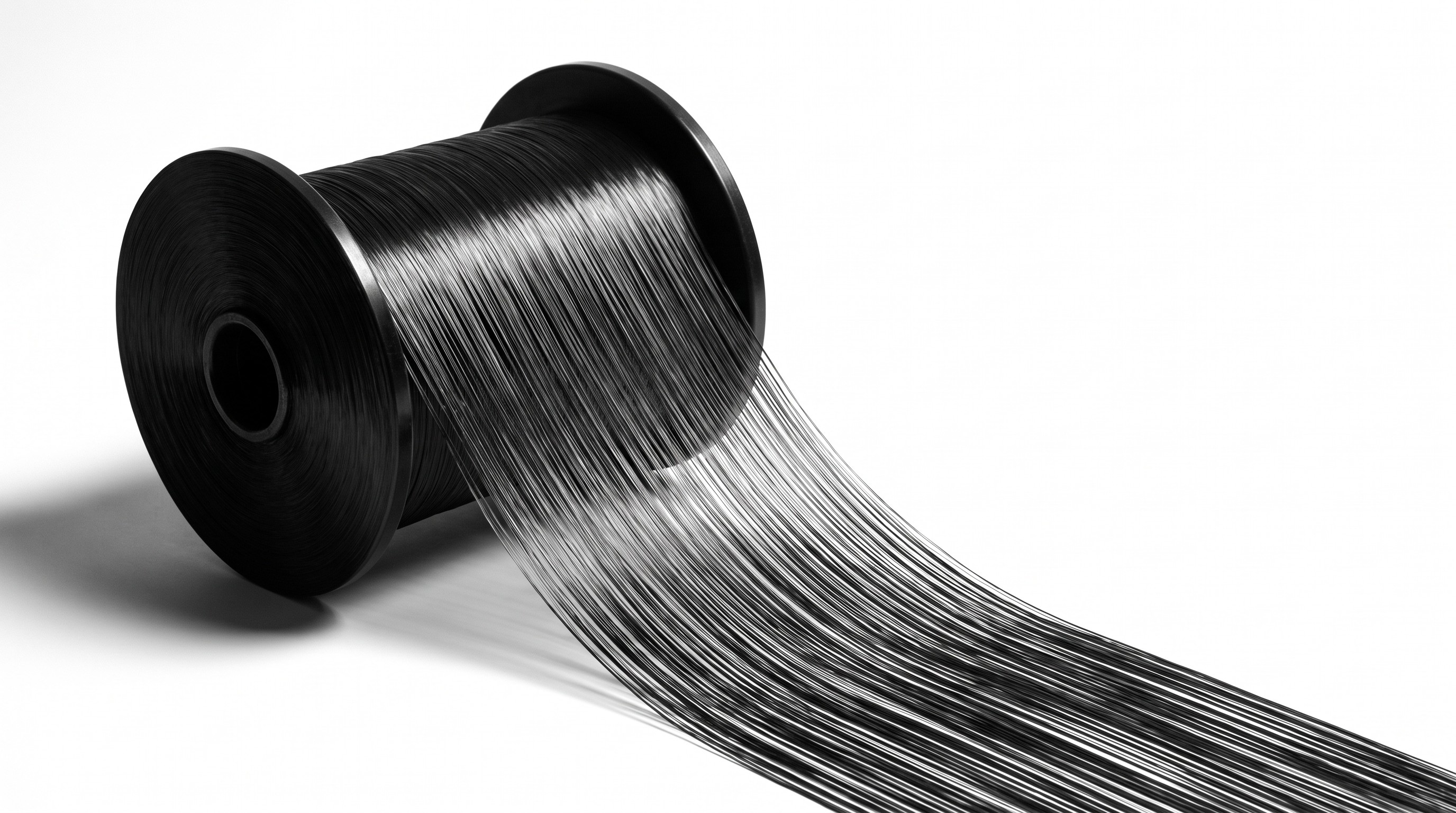
Carbon fiber tow bobbins (actual photo)

Fiber grades

Graded by tensile modulus. For most industrial, sporting and vehicle applications, standard modulus is enough.

≈230GPa

Standard modulus

Around 230 GPa class · general structures and high-strength parts

290+GPa

Intermediate modulus

From around 290 GPa · stiffness-driven high-end structures

Higher grades by project discussion

Standard modulus: tensile modulus around the 230 GPa class, with the deepest body of design data. A higher-strength grade shares the same modulus (tensile strength around 4.9 GPa class versus about 3.5 GPa class) and is the workhorse for industrial and sporting use.

Intermediate modulus: from roughly 290 GPa upward, chosen for stiffness-driven aerospace and high-end structures.

Selection logic: first ask whether your design is stiffness-driven or strength-driven. For most industrial, sporting, and vehicle applications, standard modulus is more than sufficient. Intermediate modulus carries a substantial premium — several times the cost per kilogram — and earns its keep only when the design is stiffness-limited and the weight budget cannot absorb additional plies.

Note: the figures above are published nominal fiber-class properties, not finished-part guarantees. Laminate performance depends on weave, resin, and molding process — always qualify with testing and formal test reports.

Specifications

Specs are served live from TEi's catalog; published properties (code / weave / width / weight / thickness / grade) are for reference — supply specs are confirmed on formal quotation.

Specifications
Carbon Fiber Fabric
CodeWeaveWidth (mm)Warp (/25mm)Weft (/25mm)Thickness (mm)Weight (g/m²)Roll length (m)GradeNotes
TI-1101Plain100022.522.50.15120110Standard modulus
TI-1601Twill100024250.16125110Standard modulus
TI-3101Plain100012.512.50.2200100Standard modulus
TI-3601Twill100012.5130.2204100Standard modulus
TI-3101-1Plain100012.512.50.2205100Standard modulusStabilized
TI-3601-1Twill100012.5130.2209100Standard modulusStabilized
TI-3301Plain100010100.16160100Standard modulus
TI-3201Plain100015150.24240100Standard modulus
TI-3611Twill100015150.24240100Standard modulus
TI-3151Plain127012.5130.2204100Standard modulus
TI-3711Twill127012.5130.2204100Standard modulus
TI-3108-1Plain150012.512.50.2205100Standard modulusStabilized
TI-3811-1Twill150012.5130.2209100Standard modulusStabilized
TI-3205Plain150015150.24240100Standard modulus
TI-3812Twill150015150.24240100Standard modulus
TI-39414HS100012120.2192100Standard modulus
TI-39515HS100018180.3288100Standard modulus
TI-38248HS100024240.38384100Standard modulus
TI-6101Plain100010100.32320100Standard modulus
TI-6601Twill100010100.32320100Standard modulus
TI-12105Plain10009.59.50.6160850Standard modulus, high strength
TI-12107Plain1000770.4544850Standard modulus, high strength
TI-12601Twill100010100.6464050Standard modulus, high strength
TI-301Plain100025250.24240100SilverGlitter 0.5mm
TI-302Plain100025250.24240100GoldGlitter 0.5mm
TI-303Plain100025250.24240100BlueGlitter 0.5mm
TI-305Plain100025250.24240100GreenGlitter 0.5mm
TI-307Plain100025250.24240100RedGlitter 0.5mm
Swipe to see all columns

Applications

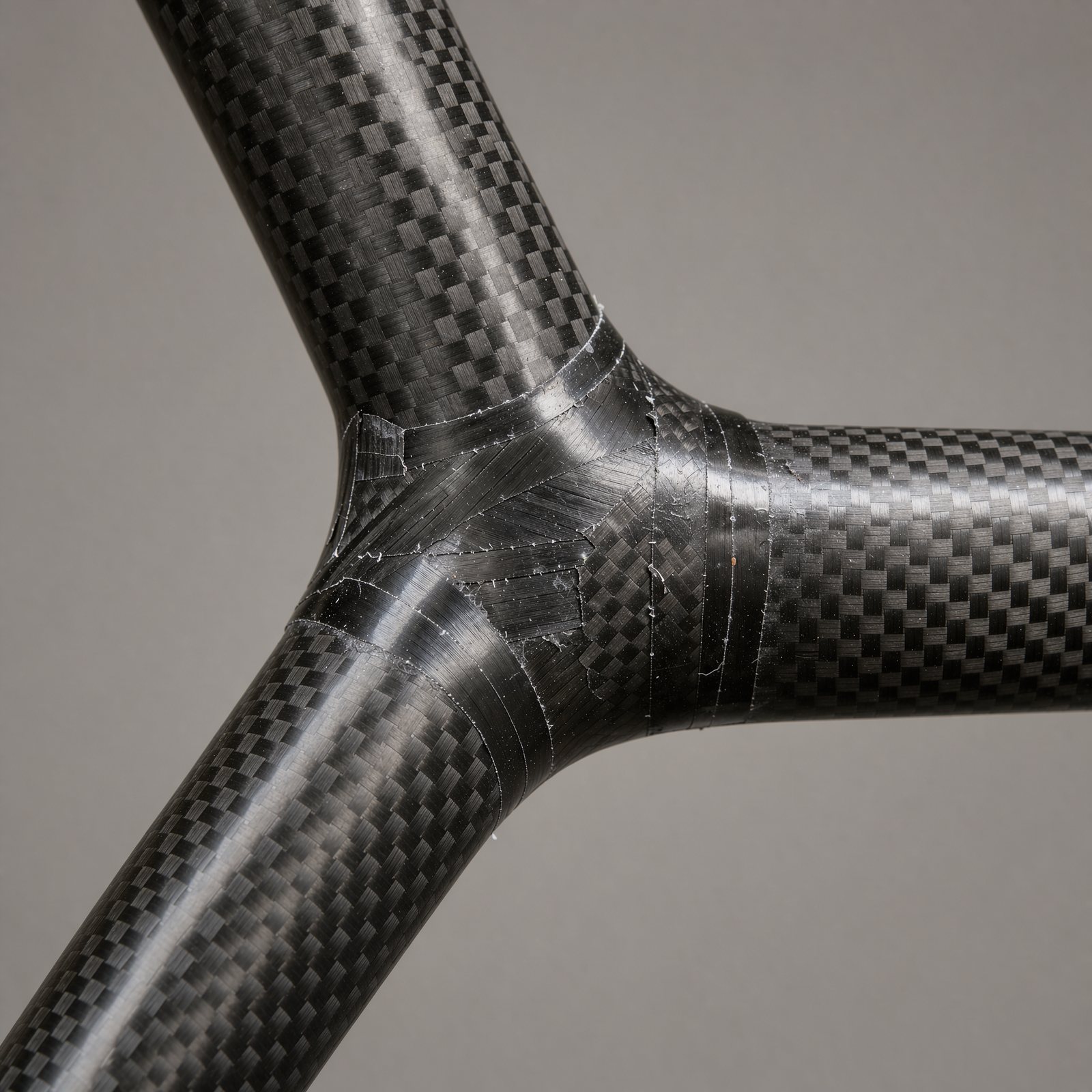
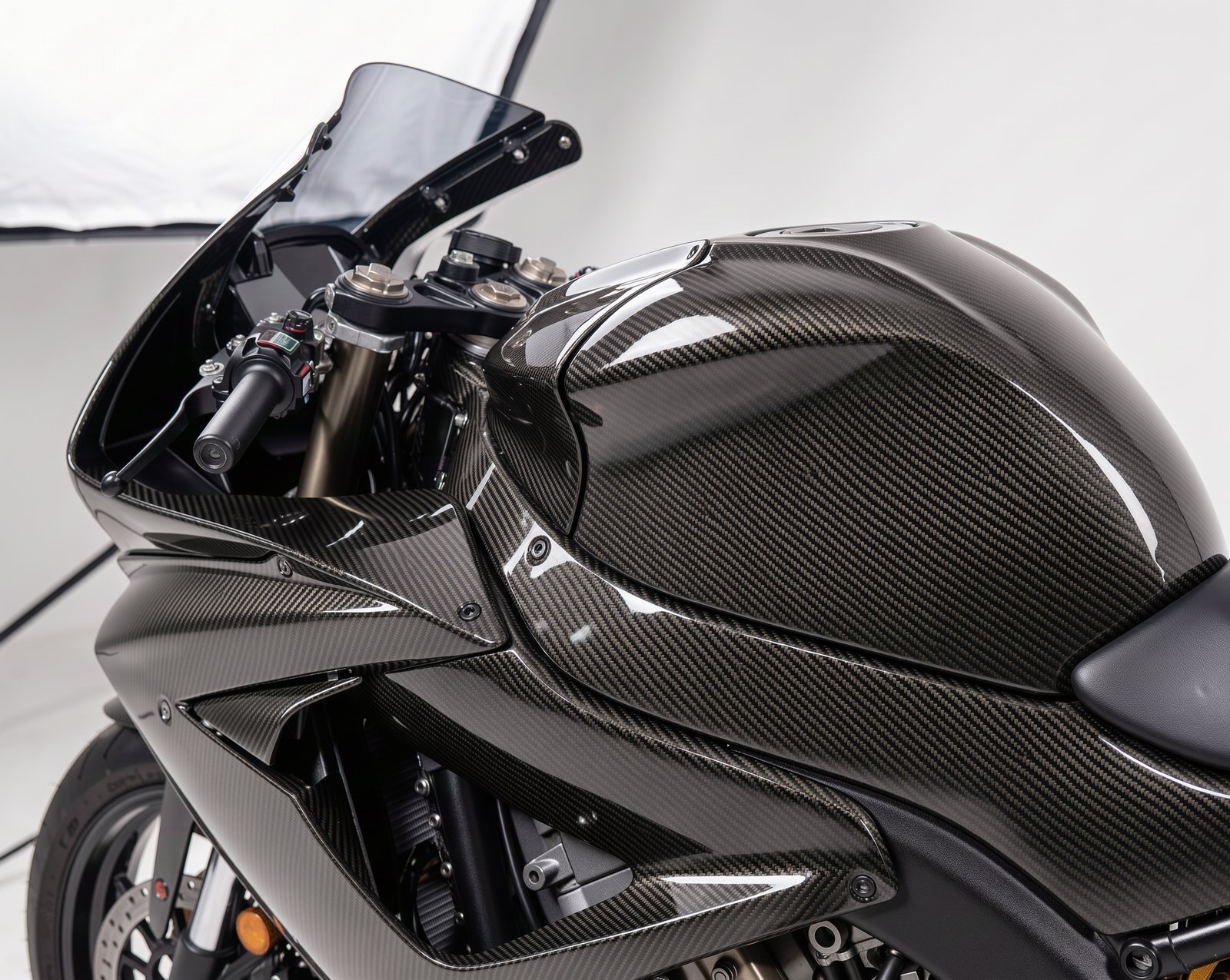
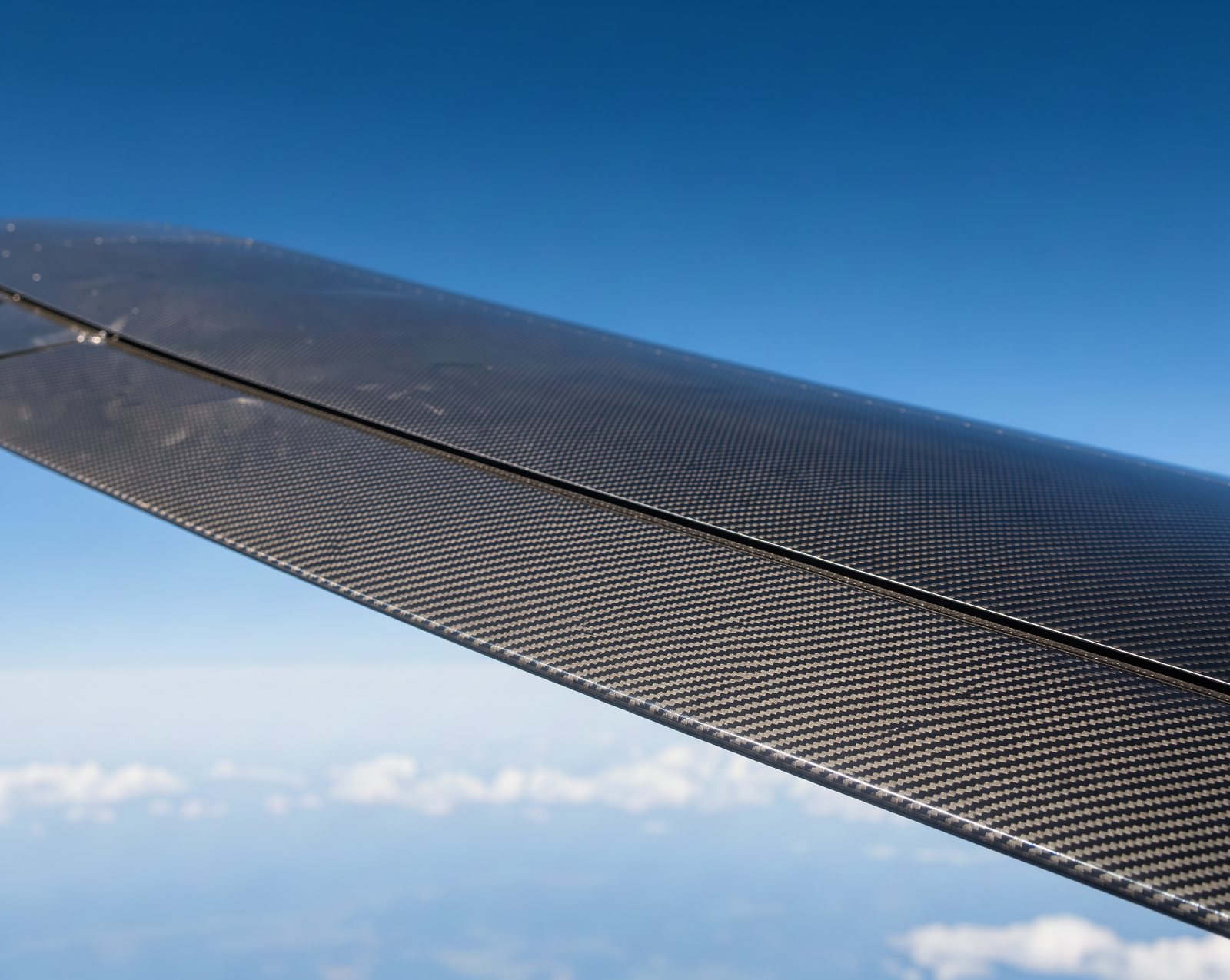
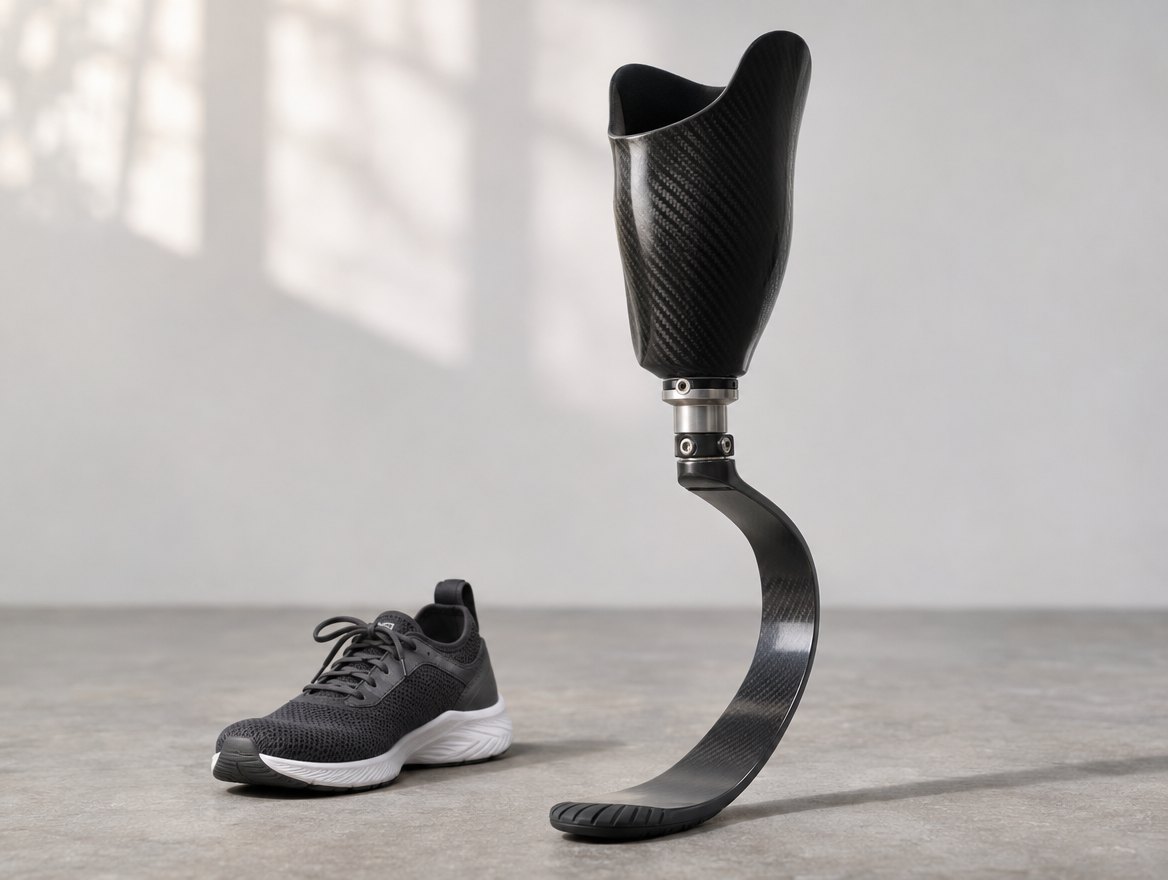
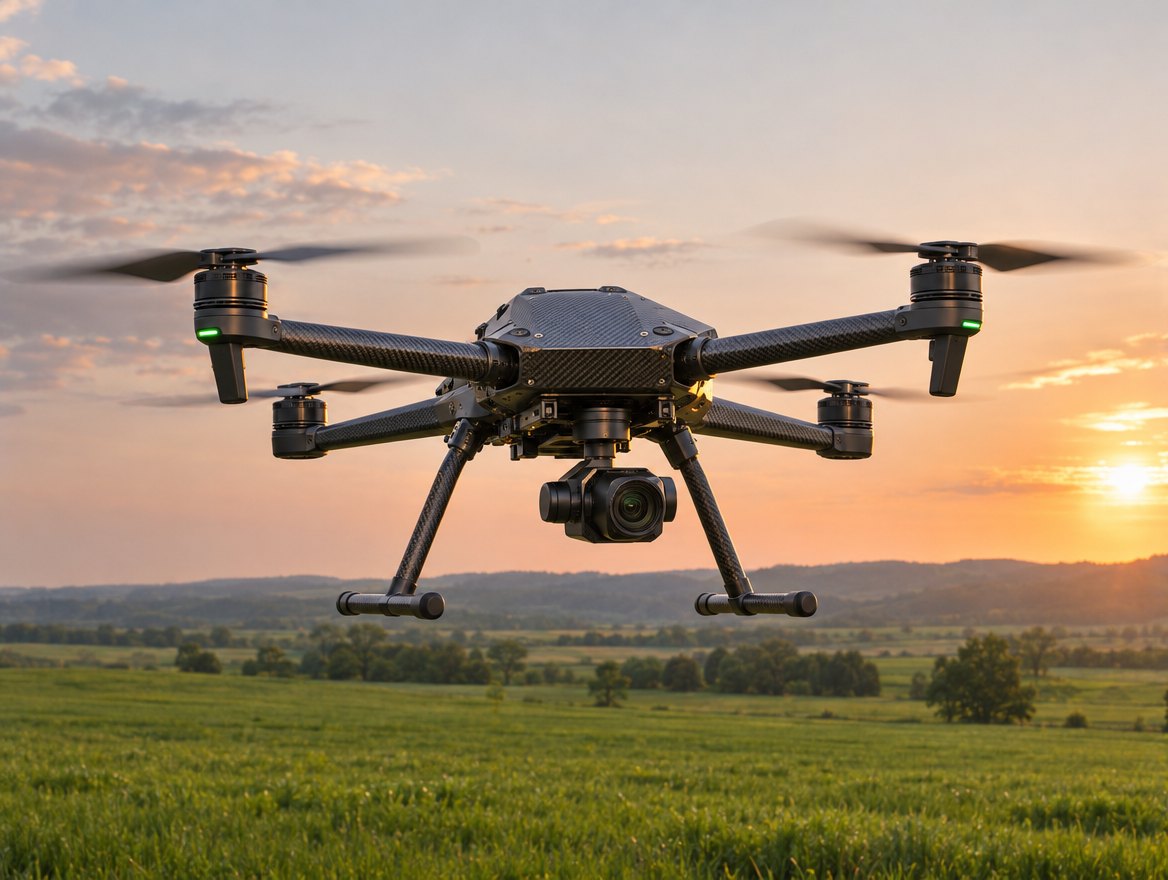
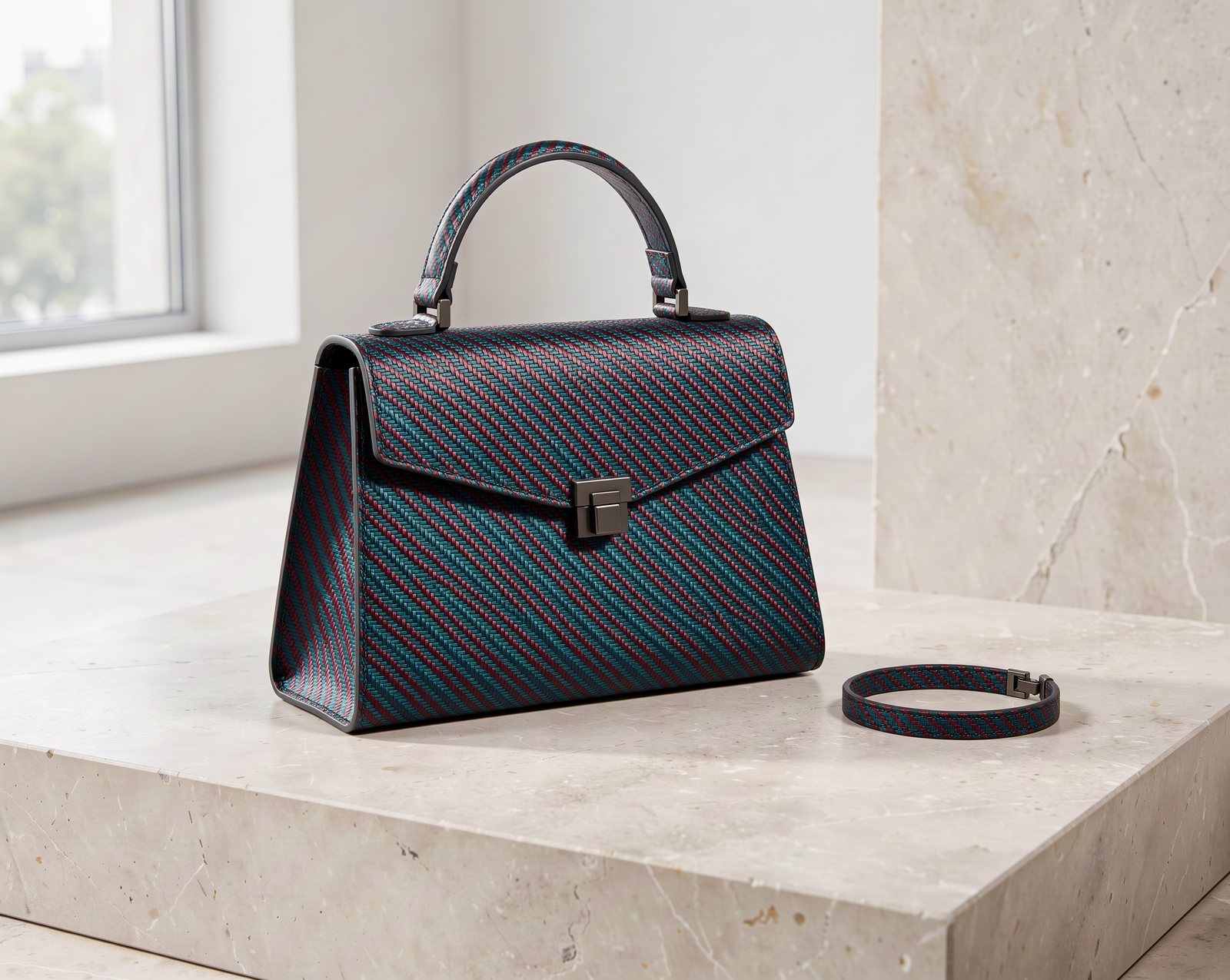
Carbon fiber bicycle frame jointSporting goodsRackets, bicycles, fishing rods, shafts: stiffness-to-weight plus tunable weave aesthetics. Carbon fiber motorcycle fuel tank coverAutomotive & motorcycleExterior trim, interiors, aero parts and lightweight structures. Carbon fiber wing structureAerospace secondary structuresInteriors, fairings, cabin structures: decades of design data behind standard-modulus grades. Carbon fiber prosthesis and running bladeMedical & assistive devicesImaging tables, prosthetics, orthotics: carbon fiber's radiolucency and high stiffness make it the material of choice for medical imaging structures. Carbon fiber end-of-arm gripper on a robotic armIndustrial automationRobot arms, high-speed moving parts. Aerial camera drone with a carbon fiber airframeDrones & roboticsFrames, arms, housings. Coastal wind turbinesMarine & energy structuresHulls, large panels, reinforcement. Luxury carbon fiber handbagFashion & luxury goodsWatch cases, luggage, trim panels: the weave itself is the design language.

FAQ

What's the difference between 3K and 12K carbon fabric?

The filament count per tow: 3K has 3,000 filaments per tow, 12K has 12,000. 3K weaves finer patterns at lower areal weights with better surface quality — ideal for cosmetic parts. 12K builds thickness faster at a lower cost per kilogram — ideal for structural stacking. For the same laminate thickness, the 12K route usually saves on both material and labor.

How do I choose between plain and twill weave?

Choose plain for flat or gently curved parts, twill for curved surfaces and visible-carbon parts. Plain weave has more crossover points — the most stable construction, least prone to fraying after cutting. Twill drapes better over curvature and carries the classic carbon look. For most applications, the mechanical difference matters less than process fit — decide by geometry first, then aesthetics.

Can carbon fiber fabric be customized?

Yes. TEi runs its own weaving lines, so width, areal weight, weave style, and tow size can all be customized to your project, including carbon/aramid/glass hybrid constructions and OEM/ODM programs. Minimum order quantities and lead times depend on the specification — talk to our engineering team.

What is spread tow fabric?

Spread tow fabric is woven from carbon tows that have been spread into thinner, wider flat tapes before weaving — less crimp at each crossover, thinner plies, and a flatter surface, improving both mechanical translation and appearance over conventional wovens. TEi offers spread tow carbon fabric under the IntenLight™ series, for applications demanding extreme thinness and surface quality.

Carbon fiber fabric or glass fiber fabric — how do I choose?

By stiffness requirement and budget: carbon offers roughly three times the stiffness of glass at lower density, but at a substantially higher cost. Choose carbon for stiffness- and weight-driven structures; choose glass for cost-sensitive applications, electrical insulation needs, or impact-tolerance priorities. TEi weaves both — and can hybridize them for a performance-cost middle ground.

Compare fibers, weaves and processes in the composite selection guide →

Carbon fabric: quotation

Get a quote View full catalog

See resin transfer moulding

Contact TEi General Project services B2B